













More than 190,000 Ghanaians are blind, the acting Head of the Eye Care Unit of the Ghana Health Service (GHS), Dr James Addy, has disclosed.
At a media forum to mark this year’s World Sight Day in Accra yesterday, he said a survey conducted by the GHS revealed that eye-related diseases were on the rise.
He stressed that most eye-related diseases, including cataract and glaucoma, could easily be prevented by seeking early medical attention.
Dr Addy indicated, however, that glaucoma was difficult to treat once it reached an advanced stage.
Regular screening
Dr Addy advised the public to regularly check their eyes for early detection of any defects.
He said since the eye was an important organ of the human body, people must make an effort to protect it.
Dr Addy also warned the public to avoid smoking, self-medication and exposing the eye to direct sun rays because those practices could be detrimental to their vision.
Touching on people with various eye diseases, Dr Addy said about 95 per cent of Ghanaians “who must use spectacles to correct their vision do not do so”.
He mentioned traditional beliefs and superstition as some of the reasons why people with various forms of eye diseases refuse to use spectacles.
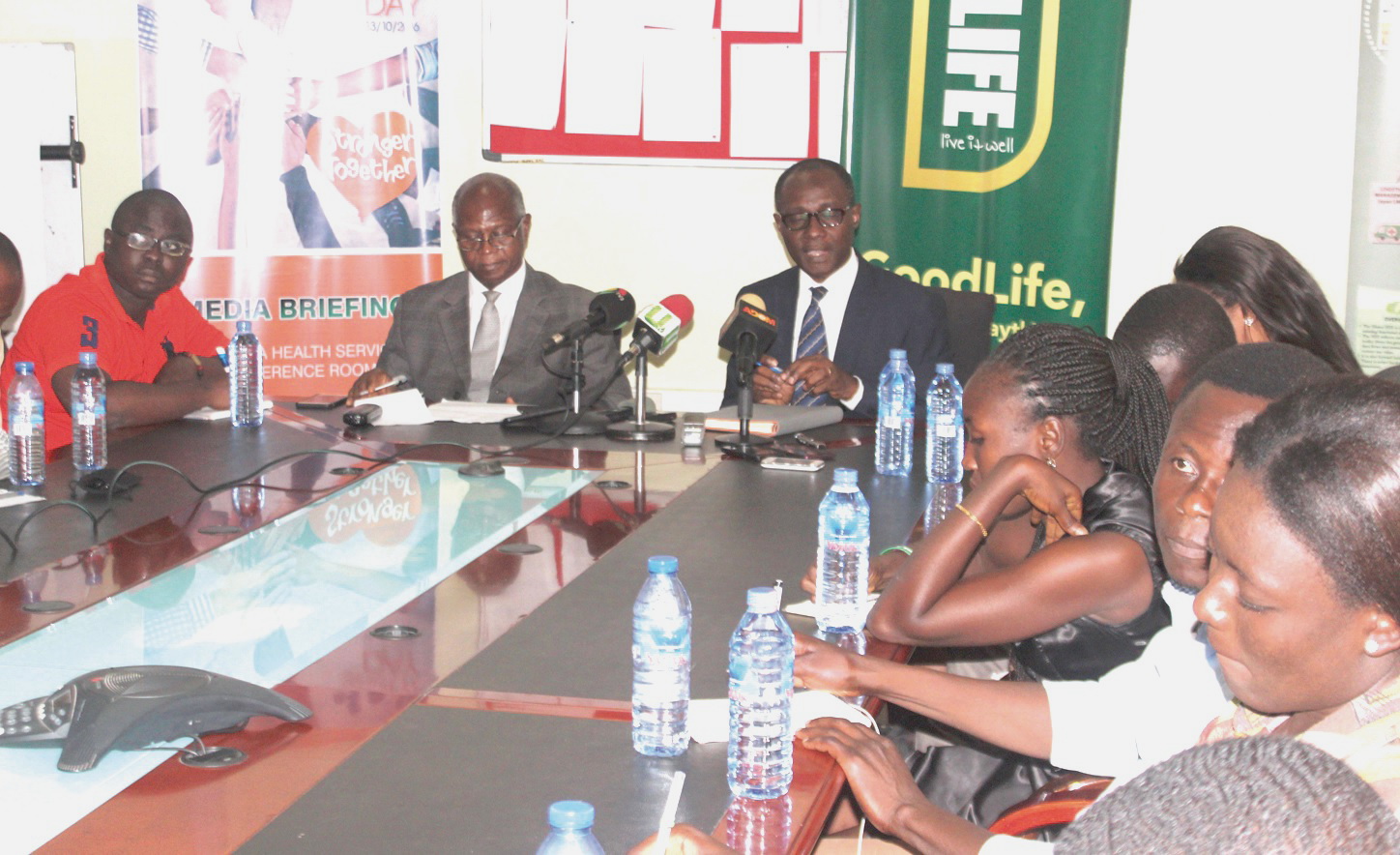
Dr James Addy (head of table), Ag Head, Eye Care Unit, Ghana Health Service, addressing some participants at the launch of the 2016 world sight day
Let’s join forces together
In his welcome address, the Director General of the GHS, Dr Ebenezer Appiah-Denkyira, called on organisations to conduct consistent eye screening exercises for their workers.
He said Ghana had more than 1,000 eye care professionals, adding that although the number was grossly inadequate, people could still take advantage to protect their sight.
“In order to create the needed awareness of the causes of blindness and visual impairment in Ghana, all stakeholders must come together to reduce the burden of blindness in the country,” Dr Appiah-Denkyira added.
In another development, the Head of the Eye Centre of the Komfo Anokye Teaching Hospital (KATH), Dr Seth Lartey, appealed to health workers and non-governmental organisations working to prevent blindness to collaborate in order to improve on their efficiency, writes Kwadwo Baffoe Donkor.
Speaking at an event held in Kumasi to mark World Sight Day, he said even though the country had a challenge with human resources for eye care, “even with the limited number, if we work together, we can achieve more.”
According to him, about eight out of 10 blind people could have been saved if only they had had their eyes checked earlier.
Regional ophthalmologist
The Ashanti Regional Ophthalmologist, Dr Patience Fletcher, also reiterated the call on Ghanaians to regularly check their eyes.
She said many people feared to go through operations to have their defects corrected and would only avail themselves of the surgery when the situation got worse.
By: Graphic Online